
Brief Overview↪ This blog outlines how AI-driven SEO strategies can boost WordPress blog rankings. It covers key topics like AI-powered keyword research, content optimization, on-page SEO, technical SEO, and link building.
By using AI tools, bloggers can automate tasks, improve efficiency, and stay ahead in SEO.
The blog emphasizes the importance of tracking performance and ethical SEO practices for long-term success.
In today’s competitive digital landscape, SEO is the cornerstone of online success. If you run a WordPress blog, you’re already ahead of the game when it comes to ease of use and flexibility.
But, to really make your blog stand out in the search engine results pages (SERPs), you need more than just basic SEO practices.
Enter AI- artificial intelligence, transforming the way we approach SEO strategies for WordPress blogs.
In this guide, we’ll explore how AI-driven SEO strategies can enhance your WordPress blog, improve your rankings, and ultimately drive more organic traffic to your site.
We’ll cover everything from keyword research and content optimization to technical SEO improvements, ensuring that your blog stays ahead of the curve.
Understanding AI in SEO: The Basics
Before diving into specific strategies, let’s take a moment to understand how AI works in the context of SEO.
AI, at its core, refers to systems and algorithms that can analyze large amounts of data, recognize patterns, and make predictions based on that data.
In the SEO world, AI is used to predict search trends, optimize content, automate tasks, and improve the overall user experience.
One of the main reasons AI has become such an integral part of SEO is its ability to process vast amounts of information quickly and accurately.
Traditional SEO methods, while still effective, don’t match the efficiency or depth of insights that AI can provide.
AI can now predict what people are likely to search for based on a variety of factors like search history, location, user intent, and more.
It can also analyze your content and suggest ways to optimize it, whether it’s in terms of keywords, structure, or readability.
AI-Powered Keyword Research: The Foundation of SEO
When it comes to SEO, keyword research is one of the most important foundational steps.
AI tools are taking this process to the next level by offering more precise and actionable insights into which keywords are most likely to drive traffic to your WordPress blog.
How AI Enhances Keyword Research
Traditionally, keyword research involved using tools like Google Keyword Planner or SEMrush to identify relevant terms. AI-powered tools take this process a step further by:
- Predicting Emerging Trends: AI can predict which keywords will become popular in the future based on patterns and search history.
- Identifying Long-Tail Keywords: AI tools excel at finding long-tail keywords—those highly specific, less competitive phrases that often result in higher conversion rates.
- Understanding Search Intent: AI can help you better understand whether users are searching for information, making a purchase, or looking for a service, allowing you to tailor your content accordingly.
Recommended AI Tools for Keyword Research
Several AI-driven tools can significantly enhance your keyword research process for WordPress blogs:
1. Ahrefs

Ahrefs offers a robust keyword research tool, which uses AI to analyze search volume, difficulty, and competition. It also suggests related keywords and provides detailed insights into keyword rankings.
Ahrefs’ AI-powered keyword tool uses artificial intelligence to assist users in finding keyword opportunities based on seed topics or initial ideas.
Rather than manually sorting through endless keyword suggestions, the AI analyzes intent, search volume, competition, and topical relevance to suggest focused and strategic keyword clusters.
Key Features:
- Keyword Explorer for long-tail keyword suggestions.
- SERP analysis to understand the intent behind searches.
- Content Gap Analysis to discover keywords your competitors rank for.
2. SEMrush

SEMrush is an all-in-one SEO tool that includes AI-driven keyword research. It not only provides keyword volume and difficulty but also suggests keyword variations and tracks their performance over time.
The AI Keyword Research Tool within SEMrush uses machine learning to go beyond basic keyword suggestions.
It interprets the context and intent behind searches, identifies keyword trends, and helps users generate content ideas that match what people are actually looking for.
It’s particularly valuable for marketers, bloggers, and SEO professionals who want to scale their content strategy with smart
Key Features:
- Keyword Magic Tool to discover keywords by filtering various criteria.
- AI-powered trend analysis to spot rising keyword opportunities.
- Competitor keyword research to find new opportunities.
3. Ubersuggest
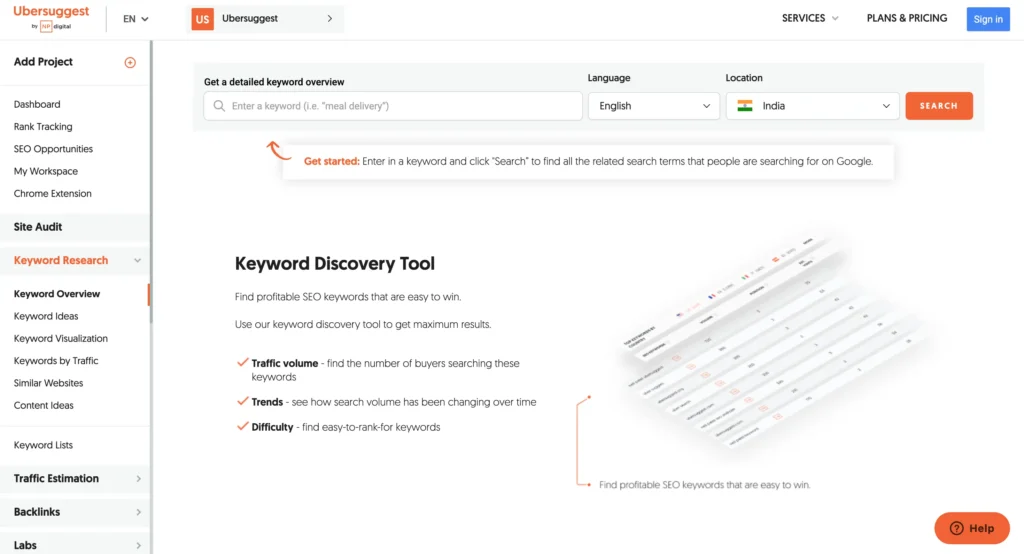
Ubersuggest, developed by Neil Patel, uses AI to help you find high-traffic keywords for your niche. It’s a user-friendly tool with a focus on ease of use and beginner-friendly features.
Ubersuggest’s AI Keyword Research Tool is a user-friendly, AI-enhanced platform designed to help individuals and businesses improve their SEO by finding the right keywords with minimal effort.
Created by Neil Patel, Ubersuggest has evolved from a simple keyword suggestion tool into a comprehensive SEO suite, and its AI capabilities make keyword research more intuitive, efficient, and strategic.
Key Features:
- Keyword suggestions based on search volume, competition, and CPC.
- AI-powered backlink analysis and SEO audit.
- Content ideas based on top-performing pages for specific keywords.
4. Keywordtool.io
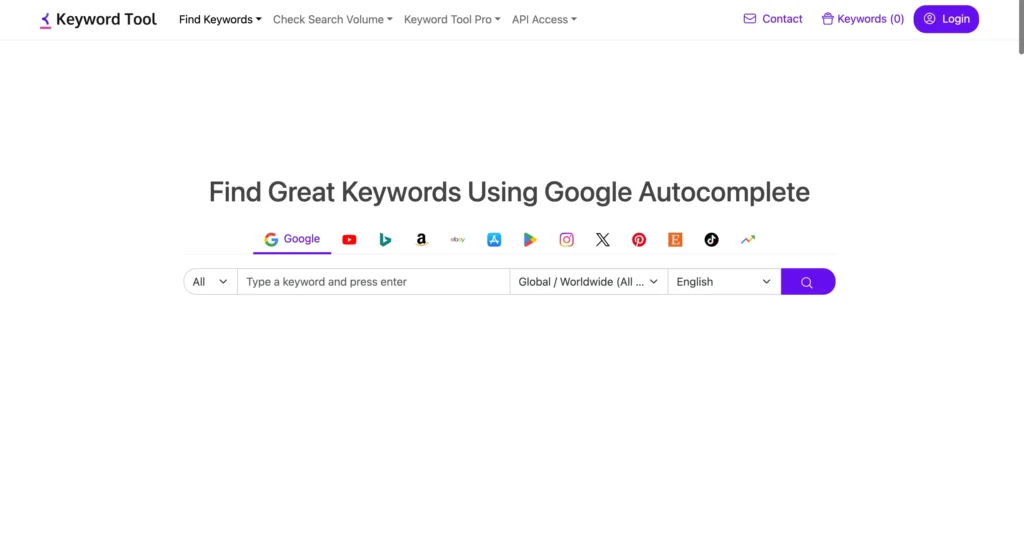
This AI-powered tool helps with finding long-tail keywords by pulling keyword suggestions from search engines like Google, YouTube, and Bing.
KeywordTool.io is a versatile keyword research platform that leverages autocomplete data from multiple search engines and platforms to help users discover relevant long-tail keywords.
While it doesn’t explicitly advertise itself as an AI-powered tool, its use of autocomplete data and advanced filtering options provides intelligent insights for SEO and content strategy.
Key Features:
- Keyword generation from autocomplete suggestions.
- SEO-related metrics for keyword analysis.
- Localized keyword research for different regions and languages.
AI-Powered Content Creation and Optimization
Creating high-quality, engaging content is essential for driving organic traffic.
But writing optimized content that resonates with both readers and search engines can be a challenge.
Fortunately, AI has revolutionized this process, making content creation faster, easier, and more effective.
AI Tools for Content Creation
AI-powered content creation tools can help you generate SEO-friendly blog posts, articles, and web copy with minimal effort.
Tools like Jasper and Copy.ai can assist you in generating content outlines, drafting paragraphs, and optimizing content for SEO.
Here’s how AI can optimize your content creation process:
- NLP and Readability: AI tools can use Natural Language Processing (NLP) to ensure your content is clear, readable, and well-structured.
- Tone and Voice Adjustments: AI can adjust the tone and style of writing, making it more conversational or formal depending on your target audience.
- Semantic Content: AI tools ensure your content is not just keyword-rich, but also semantically aligned with related topics, which is crucial for SEO.
Optimizing Content with AI
Once the content is created, AI can help you optimize it for search engines:
- Content Structure: AI tools can analyze your headings and subheadings, suggesting changes to improve keyword relevance and structure.
- Meta Tags and Descriptions: AI tools can generate optimized meta descriptions and title tags to improve click-through rates (CTR) in search results.
- Internal Linking: AI-powered tools like RankMath suggest opportunities for internal linking, improving your site’s SEO and user experience.
Enhancing On-Page SEO with AI
On-page SEO refers to all the elements you can optimize on your website itself—like titles, meta descriptions, URL structures, header tags, and content.
AI tools are invaluable in identifying areas of improvement and ensuring that your WordPress blog ranks higher in search engine results.
Key On-Page SEO Elements Enhanced by AI
- Meta Descriptions: AI can generate SEO-friendly meta descriptions that include relevant keywords and compelling calls to action (CTAs).
- Header Tags (H1, H2, etc.): AI can suggest header tags and subheadings that align with your primary keyword, ensuring that search engines understand the content structure.
- Image Optimization: AI-powered tools like Imagify can automatically compress and optimize images for faster loading times, which is critical for SEO.
Tools to Improve On-Page SEO For WordPress
For Improving On-Page SEO for WordPress you can use the SEO plugins like:
- Yoast SEO: This plugin uses AI to analyze your on-page SEO and suggests improvements for keyword usage, meta tags, and readability.
- Rank Math: It is also a SEO plugin for WordPress but it offer many options and feature in its free plan that Yoast offer on pro plans.
- SEMrush: AI-driven recommendations for optimizing page content, including keyword density and content suggestions.
Technical SEO Improvements with AI
While content is king, technical SEO is the backbone of your website’s SEO success.
AI can assist in identifying and fixing technical SEO issues, ensuring that your site is fully optimized for both search engines and users.
AI for Site Audits and Optimization
AI tools can crawl your WordPress site, identifying technical issues that could negatively affect your SEO.
These issues may include:
- Broken Links: AI can automatically detect and suggest corrections for broken links that can harm your site’s credibility.
- Page Speed: AI-powered tools can analyze your site’s loading speed and offer recommendations for optimization, such as image compression and caching improvements.
- Mobile Optimization: With mobile-first indexing becoming the norm, AI can help ensure your WordPress blog is fully optimized for mobile devices.
Recommended AI Tools for Technical SEO
Screaming Frog
Screaming Frog SEO Spider is a powerful desktop-based SEO tool used primarily for website crawling and technical SEO audits.
Unlike tools that focus mainly on keyword research or backlink analysis, Screaming Frog excels at scanning websites the way a search engine would, revealing structural and on-page issues that could affect search rankings.
- Key Features: While not entirely AI-driven, the Screaming Frog SEO Spider tool offers excellent crawling capabilities. It can integrate with AI-powered tools to provide deeper analysis.
- Why It’s Good for Technical SEO: Screaming Frog can crawl through large websites and identify issues like duplicate content, missing tags, broken links, and other technical SEO problems.
Google Search Console (GSC) + AI Integration
Google Search Console (GSC) is a free web service provided by Google that helps website owners, SEO professionals, and developers monitor, maintain, and troubleshoot their site’s presence in Google Search results.
- Key Features: Google’s native tool for webmasters includes data on site performance, technical errors, and much more. There are integrations with AI-driven tools that can enhance your reporting.
- Why It’s Good for Technical SEO: While not strictly an AI tool itself, GSC offers deep insights into indexing issues, crawl errors, and site performance. Pairing it with AI analytics can help prioritize issues.
Surfer SEO
Surfer SEO is a cloud-based on-page optimization and content strategy tool that blends traditional SEO with AI-driven keyword research and content optimization.
Its main goal is to help users create content that ranks by analyzing top-performing pages and providing data-backed, real-time guidance.
- Key Features: Surfer is an AI-powered on-page optimization tool that uses data to create content briefs, optimize keywords, and audit technical SEO aspects.
- Why It’s Good for Technical SEO: Surfer’s audit tool looks into things like page structure, keyword density, and technical factors like site speed and mobile-friendliness. It offers a detailed view on what needs to be fixed.
DeepCrawl
DeepCrawl (now known as Lumar) is a cloud-based website crawling and technical SEO platform built for enterprises and large-scale websites.
It focuses on in-depth site audits, performance monitoring, and optimization of technical SEO health across complex domains.
Key Features: DeepCrawl is an AI-powered website crawler for large-scale SEO audits. It provides detailed reports on technical issues across your site.
Why It’s Good for Technical SEO: DeepCrawl’s AI-powered crawlers can identify deep-rooted issues with site architecture, internal linking, and other technical elements that can hinder SEO.
AI-Driven Link Building Strategies
Backlinks are one of the most important ranking factors for search engines.
AI can significantly enhance your link-building strategy by identifying high-quality link opportunities and automating parts of the outreach process.
How AI Improves Link Building
- Identifying Quality Backlinks: AI can analyze a competitor’s backlink profile and suggest high-quality domains that could link to your site.
- Outreach Automation: Tools like BuzzStream and Pitchbox use AI to automate the outreach process, helping you identify and contact relevant websites for backlinks.
- Content Personalization: AI helps personalize your outreach emails, increasing the chances of a successful response.
Tracking and Analytics with A
Once you’ve implemented AI-driven SEO strategies, it’s crucial to track your performance and make data-driven adjustments.
AI-powered analytics tools help you monitor your site’s SEO performance and provide insights for ongoing improvements.
AI-Powered Analytics Tools
- Google Analytics: While not strictly AI, Google’s machine learning algorithms provide predictive insights into user behavior and conversion rates.
- MarketMuse: This AI tool helps you analyze content performance, track keyword rankings, and discover content gaps.
Ethical Considerations in AI-Driven SEO
As AI continues to evolve, it’s important to consider the ethical implications of its use in SEO. While AI can provide significant benefits, it’s essential to use these tools responsibly:
- Data Privacy: Ensure that any data collected for SEO purposes complies with data privacy regulations like GDPR.
- Transparency: Avoid using AI tools to create misleading or spammy content. Always focus on providing value to your users.
- Content Authenticity and Plagiarism: AI-generated content is becoming increasingly popular for content creation in SEO. While tools like AI writers or content generators can produce large volumes of content quickly, this raises concerns over content originality and authenticity.
- Manipulating Search Results: Some businesses may attempt to use AI-powered SEO tools to manipulate search rankings in unethical ways, such as by exploiting clickbait, keyword stuffing, or generating low-quality backlinks.
- Over-Reliance on AI: While AI tools offer great benefits, relying too heavily on them without human oversight could result in a lack of creativity and an overly mechanistic approach to SEO.
Conclusion
Incorporating AI-driven SEO strategies into your WordPress blog can significantly enhance your ability to improve search engine rankings, drive organic traffic, and stay competitive in today’s fast-evolving digital landscape.
From automating keyword research and optimizing content to streamlining technical SEO and link-building efforts, AI tools provide powerful insights that can make your blog more efficient and effective.
By leveraging AI to predict search trends, optimize content structure, and identify technical issues, you can ensure your WordPress blog remains ahead of the curve.
However, it’s crucial to remember the importance of ethical SEO practices, such as ensuring content authenticity and prioritizing data privacy.
With a balanced approach that combines AI tools and human creativity, you can achieve long-term SEO success that aligns with your blog’s goals and provides real value to your audience.
More to read: